CPO Guide Logo

Court-issued civil protection orders (CPOs) provide domestic violence victims with important options while influencing batterers to stop the abuse. An integrated and consistent protection order system that coordinates issuing, serving, and enforcing court orders promotes victim safety and helps save lives. The NCJFCJ recognizes that an effective civil protection order system relies upon the interplay and interdependence of each profession’s work; judges, law enforcement, prosecutors, advocates, civil attorneys, and others. We seek to increase the capacity of communities, courts, judges, and related professionals to enhance victim safety and offender accountability through effective protection order practices.

The NCJFCJ works within a network of national organizations to promote improved civil protection order practice. We offer technical assistance to courts, judges, and other professionals to address challenges and emerging needs identified by those involved in the issuance, service, and enforcement of protection orders. In addition, we conduct webinars and workshops on topics concerning protection orders, including custody and visitation, victim autonomy, compliance review, and firearms surrender. We also provide on-site multi-disciplinary training based on an interactive curriculum designed to help communities assist victims with a unified, cohesive, and reliable response. The participatory workshop model for this curriculum brings together the various professionals needed to implement system change and improvement through coordinated community responses. Our roundtables and other structured discussions with judges and justice system professionals explore the challenging issues involving the protection order process and identify possible strategies for addressing those issues. These discussions often lead to the development of new materials or resources for judges and other professionals. Together, the NCJFCJ’s technical assistance, training, and resource development offer courts and communities the opportunity to enhance their ability to safeguard victims of domestic violence, provide for children’s safety and wellbeing through the use of child-related relief in civil protection orders, and hold abusers accountable.

This project was supported by Grant No. 15JOVW-21-GK02257-MUMU awarded by the Office on Violence Against Women, U.S. Department of Justice. The opinions, findings, conclusions, and recommendations expressed in this publication/program/exhibition are those of the author(s) and do not necessarily reflect the views of the Department of Justice, Office on Violence Against Women.
Frequently Asked Questions

What is the Civil Protection Order (CPO) Guide?

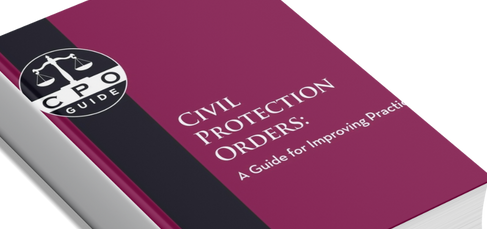
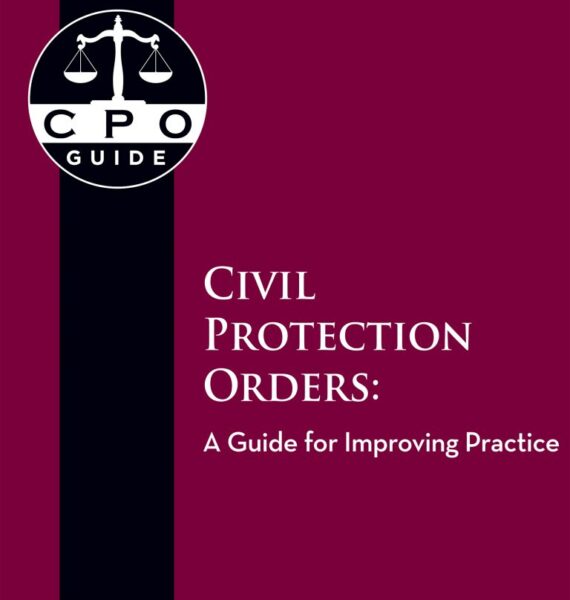
The NCJFCJ convened a group of national subject matter experts in 2009 to examine what new guidance was needed to promote improved practices in CPO cases. The group’s efforts culminated in the creation of the Civil Protection Orders: A Guide for Improving Practice (CPO Guide). The document offers a Common Ground segment reflecting overall essential values and details specific guidance by profession.

What are the Common Ground values providing a framework for positive systems change in CPO processes?

The CPO Guide lists the following as universal values for professions:
Safety – protecting individuals from harm throughout the process
Autonomy – tailored relief that meets individual needs
Accessibility – a system that is open without barriers to seeking assistance
Competence – qualified, capable assistance available throughout the CPO system
Reliability – consistency and dependability within the system
Collaboration – CPO systems working from shared goals and prioritizing collaboration
Culture and Diversity – CPO systems reflecting the community and responding to specific needs and circumstances
Community Engagement – partnership and commitment between courts and communities to provide support/services and safety

What discipline-specific advice does the CPO Guide provide?

The original CPO Guide provides guidance for the following professions/disciplines: Advocates, Civil Attorneys, Courts & Judiciary, Law Enforcement, and Prosecutors. Recent CPO Guide supplements provide guidance for two additional disciplines: Court Personnel and Court Supervision.

What technical assistance is available under the CPO project?

We offer a variety of technical assistance including access to publications (see Publications), webinars (recordings available, see Webinars), on-site and remote training (see TA Request), consultation or system collaboration and improvement (see TA Request or email us at info@civilprotectionorders.org and other assistance tailored to specific requests.

Technical Assistance Requests

We do not provide direct services, legal advice, or legal assistance on individual cases. If you or someone you know is in danger, please contact 911 or the National Domestic Violence Hotline at 1-800-799-7233. We provide online and in person training and phone consultation to communities and professionals interested in improving their civil protection order systems. To submit a request, please use the form linked below.
Request Technical Assistance or Training